
Blog
Google Ads vs Meta Ads: Which Is Right for Your Business?
Google Ads vs Meta Ads: Which Is Right for Your Business?
If you’re a small business owner thinking about paid advertising, you’ve probably come across Google Ads and Meta Ads and wondered which one you should be using, or whether you need both.
The short answer is: there isn’t a “better” platform. There is only the platform that best fits your business goals, audience and timing.
This article explains the difference in plain English and helps you decide where to start.
The Simple Difference Between Google Ads and Meta Ads
At a high level, Google Ads and Meta Ads do very different jobs.
Google Ads
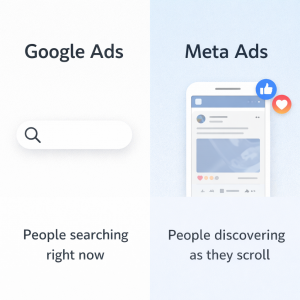
Google Ads are about capturing existing demand.
Your ad appears when someone is actively searching for something, usually because they have a problem to solve or a service they need right now.
For example:
- “accountant near me”
- “emergency plumber Aylesbury”
- “IT support for small business”
The intent already exists. Your job is to show up at the right moment.
Meta Ads (Facebook & Instagram)
Meta Ads are about creating awareness and interest.
Your ad appears while someone is scrolling on platforms like Facebook and Instagram. They’re not searching for you, you’re appearing in front of them based on interests, behaviour and demographics.
It’s worth noting that Meta Ads don’t just run on Facebook and Instagram. The Meta family includes a wider network, but for most small businesses these two platforms are where ads are most commonly seen.
Meta Ads work by:
- Introducing your business
- Building familiarity
- Warming people up over time
When Google Ads Is a Good Option
 Google Ads can be a strong choice if you offer something people are already searching for.
Google Ads often work well if you:
- Provide a clear service or product with obvious search demand
- Solve a specific problem, often with urgency or clear intent
- Want enquiries, bookings or sales now, rather than just visibility
- Have a website or landing page that clearly explains what you do
- Prefer fewer, higher-intent leads over broad awareness
Google Ads are particularly effective for:
- Local services
- Professional services
- Trades and repairs
- IT, legal, financial and consultancy services
- Businesses with a defined location or service area
In simple terms, Google Ads help you get found when someone has already decided they need help.
When Meta Ads Are Worth Considering
Meta Ads are better suited to businesses that need to build awareness, trust or interest before someone is ready to buy.
Meta Ads can be a good option if you:
- Are building brand awareness or visibility
- Offer something people don’t always search for directly
- Have strong visuals, stories or social proof
- Want to nurture people over time rather than convert instantly
- Are promoting events, launches or community-based services
Meta Ads work well for:
- Lifestyle brands
- E-commerce
- Courses and memberships
- Events and launches
- Businesses with a strong story or visual identity
Unlike Google Ads, Meta Ads are interruption-based. You are not catching someone at the moment they search. You are introducing yourself and earning attention gradually.
Google Ads vs Meta Ads at a Glance
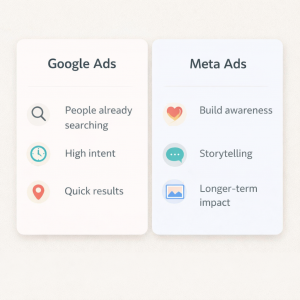 Here’s a simple way to think about the difference:
- User mindset
- Google Ads: “I need something”
- Meta Ads: “I’m browsing”
- Speed of results
- Google Ads: Often faster
- Meta Ads: Usually slower but builds momentum
- Intent
- Google Ads: High intent
- Meta Ads: Low to medium intent initially
- Creative
- Google Ads: Messaging and clarity matter most
- Meta Ads: Visuals and storytelling matter more
- Best for
- Google Ads: Lead generation and direct enquiries
- Meta Ads: Awareness, nurturing and brand building
Do You Need to Choose Just One?
Not necessarily.
Many businesses eventually use both platforms together, but not always at the same time.
A common approach is:
- Use Google Ads to capture people actively searching for help
- Use Meta Ads to build familiarity and reinforce your brand
That said, timing and budget matter. It’s often better to start with one platform done properly, rather than spreading spend too thinly across both.
The Most Important Thing Before Running Any Ads
Before spending money on any platform, it’s important to be clear on:
- What you’re offering
- Who it’s for
- What action you want people to take
Ads don’t fix unclear messaging or weak offers. They amplify what’s already there.
A well-planned campaign with modest spend will almost always outperform a rushed campaign with a bigger budget.
Final Thoughts
Google Ads and Meta Ads both have a place, but they serve different purposes.
- If people are actively searching for what you offer, Google Ads can be a very effective starting point.
- If you need to build awareness, trust or demand, Meta Ads are worth considering.
If you’re unsure where to start, clarity always comes before ads. Understanding your goals, audience and message will save time, money and frustration later.
Get In Touch
From Book to Bestseller: How a Virtual Assistant Supports Authors After Publication
From Book to Bestseller: How a Virtual Assistant Supports Authors After Publication
Finishing a book feels like crossing a finish line. In reality, it’s only the halfway point.
Once the manuscript is complete, most authors are suddenly faced with a mountain of tasks they never expected. Launch plans, social media, press outreach, podcast pitches, ad campaigns, reviews and endless admin quickly start eating into the time they hoped to spend writing their next book.
This is where a Virtual Assistant for authors becomes invaluable.
I work with writers and publishers behind the scenes to turn a finished book into a successful, visible launch and I’ve seen first-hand how much easier the journey becomes when authors are supported properly.
Creating a Book Launch Timeline That Actually Works
 A Virtual Assistant helps authors create a realistic book launch plan. That means setting deadlines for:
-
Cover reveals
-
Pre-order campaigns
-
Blog and newsletter schedules
-
Review outreach
Instead of guessing what should happen next, you have a clear roadmap from manuscript to publication and beyond.
Real Example – Running Meta Ad Campaigns to Boost Book Sales
In the run up to Christmas, I supported an author with a targeted Meta ads campaign to help promote the launch of both his paperback and audiobook. This involved creating the campaign structure, supporting the creative and monitoring performance so adjustments could be made quickly.
I’m now working alongside a book publisher preparing Meta ad campaigns ahead of their next major book release. This type of behind-the-scenes marketing support is exactly where a Virtual Assistant can remove pressure from authors while still driving results.
Managing Reviews, Bloggers and Influencer Outreach
 Reviews don’t appear magically. They need planning, tracking and follow-up.
A Virtual Assistant can:
-
Build outreach lists of reviewers, bloggers and influencers
-
Track who has been contacted and who needs chasing
-
Manage ARC distribution
-
Organise deadlines so no opportunity is missed
As a keen reader myself, I review books regularly on NetGalley, with reviews appearing on Amazon and Waterstones. I’ve also been a member of book clubs for over 20 years, so I understand what readers look for and how reviews influence buying decisions.
Podcast Research and Guest Appearances
 One of my clients wanted to expand her audience through podcast interviews. I researched and created a list of suitable shows, including contact details, themes and pitching angles.
A Virtual Assistant takes care of:
-
Researching podcasts and blogs
-
Drafting pitch emails
-
Tracking responses
-
Scheduling interview dates
So authors can focus on showing up and sharing their story.
Writing and Distributing Press Releases
Many authors dread press. Knowing what to write and where to send it can feel overwhelming.
I’ve supported clients by writing press releases and managing their distribution, ensuring their book news reaches the right journalists and publications at the right time.
This is another way a Virtual Assistant helps turn a book launch into a professional, media-ready event.
Turning One Book Into Months of Content
 Every chapter of a book can become:
-
Blog articles
-
Newsletter themes
-
Social media captions
-
Quote graphics
-
Short-form posts
A Virtual Assistant helps authors build a content engine so their book continues to sell long after launch day.
Why Authors Work With a Virtual Assistant After Publication
A book deserves more than a single release week.
When you work with a Virtual Assistant for authors, you gain someone who:
-
Builds structure around your ideas
-
Keeps your launch on track
-
Handles the admin, tech and marketing tasks
-
Helps your book reach the audience it deserves
So instead of feeling buried in tasks, you get back to doing what you do best.
Writing the next book.
Get In Touch
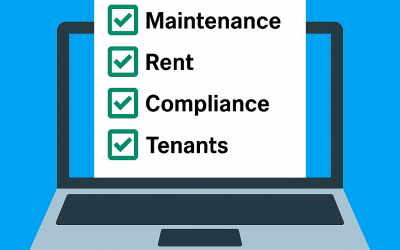
Why Remote Property Management Matters – and What Good Landlord Support Should Look Like
Managing rental properties has never been more complex. From compliance requirements and maintenance issues to tenant communications and dealing with arrears, private landlords often face a heavy workload. That’s why many are turning to professional support - even if...

How to Tidy Dropbox Without Breaking Anything: The Shortcut + Archive Method for Busy Businesses
When you’re juggling tenants and contractors, fundraising campaigns, board papers, social media content, or client projects, your Dropbox can go from “organised system” to “digital avalanche” surprisingly quickly. Virtual Assistants see this a lot - not because people...
How a Virtual Assistant Can Strengthen Your Google Brand Profile and Boost Online Authority
When people search for your organisation, do they find the right information straight away or a scattered mix of links and outdated details? That’s where your Google Brand Profile comes in. It’s the box that appears on the right-hand side of Google Search when someone...

5 Ways a Virtual Assistant Can Strengthen Your Organisation’s Communications
In every organisation, communication sits at the heart of how things get done. Whether it’s keeping staff informed, responding to clients, updating supporters, or sharing good news stories online, clear communication makes a world of difference. Yet for many small and...
Shopify vs WooCommerce: Choosing the Best Platform for SEO & Sales
What every small business owner needs to know before picking a platform Why Your E-commerce Platform Matters Your e-commerce platform is more than just a shop front — it’s the engine that powers your online visibility. At Red Desk, we work with small business owners...
Want to Be Found on Google? Connect Your Shopify or WooCommerce Store Today
If you're running an online shop using Shopify or WooCommerce, being visible on Google is no longer optional - it’s essential. While social media can help build community and drive engagement, Google is still the go-to place for product discovery. As a Virtual...
Want More Sales? Use Social Media to Showcase Your Products Like a Pro
Running an online shop through Shopify or WooCommerce? Whether you're selling handcrafted jewellery, eco-friendly skincare, or curated gift boxes, social media is your shop window to the world. As a Virtual Assistant based in Wendover near Aylesbury, Buckinghamshire,...

Stop Buying Likes: How to Build a Real Facebook Audience
If you want long-term growth, it starts with real people - not fake numbers. When you're trying to build your presence on Facebook, it’s tempting to buy likes. The numbers look good. It feels like progress. But the truth is: if those likes aren’t real people who care...

2025 Hashtag Tips for Virtual Assistants, Freelancers and Business Owners
If you’re running a small business, offering freelance services, or managing social media as a Virtual Assistant, you’ve likely asked yourself: Do hashtags still matter in 2025? The short answer is yes, but only if you use them wisely. Hashtags have shifted from...

Stay Ahead Online: Why Your SEO Needs an AI Upgrade
The way we search online is changing. With the rise of AI-powered tools such as ChatGPT and Google’s AI Overviews, users are no longer just typing in keywords - they're having conversations with search engines. For businesses looking to remain visible and relevant...